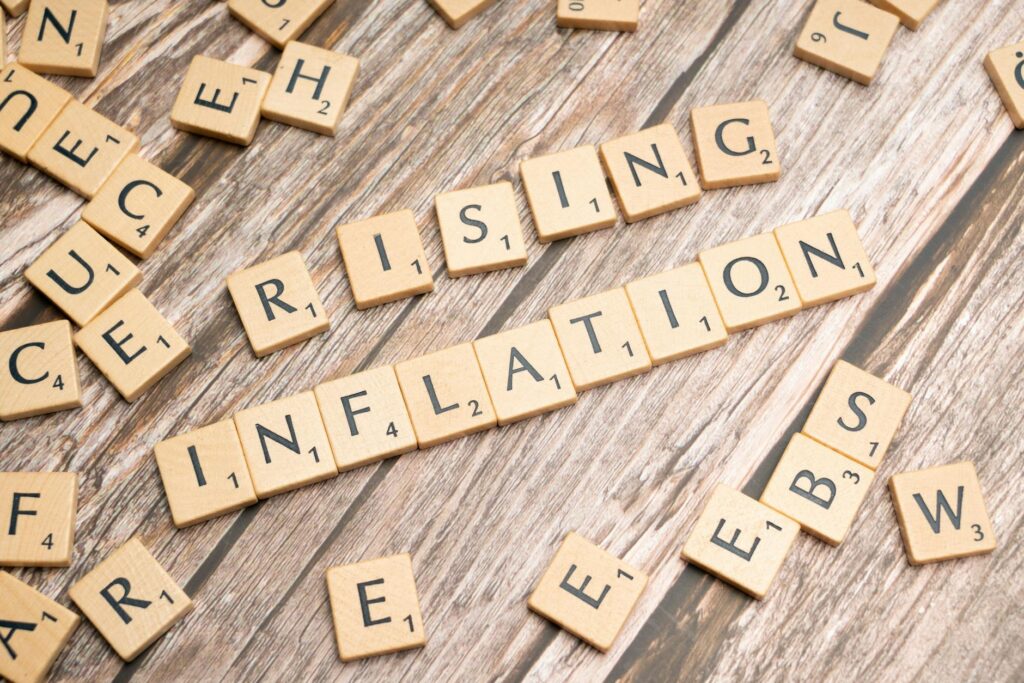
Inflation directly impacts real estate values by increasing property prices, construction costs, and borrowing expenses for homebuyers. When inflation rises, real estate often serves as a hedge against purchasing power loss, making properties more valuable over time. Understanding this relationship helps you make smarter investment and homeownership decisions.
The Direct Link Between Inflation and Property Prices
Inflation and real estate values move in tandem for several fundamental reasons. As the general cost of living increases, the materials needed to build homes—lumber, steel, concrete, and labor—all become more expensive. Contractors pass these increased costs to buyers, driving up property values across the market.
Additionally, inflation erodes the purchasing power of money. A dollar today won’t buy as much as it did a year ago. Property owners recognize this and adjust asking prices accordingly. If your home was worth $300,000 last year and inflation was 5%, you might reasonably expect it to appreciate to around $315,000 this year, assuming no other market factors change significantly.
Banks and lenders also factor inflation expectations into mortgage interest rates. Higher inflation typically leads to higher interest rates, which can cool buyer demand temporarily. However, over the long term, real estate historically outpaces inflation, making it a reliable wealth-building asset. Homeowners who locked in mortgages at lower rates benefit even more when inflation pushes property values upward while their monthly payments remain fixed.
Inflation’s Impact on Mortgage Affordability
While inflation can increase home values, it simultaneously affects your ability to afford that home. Here’s the paradox: inflation drives up property prices, but it also forces lenders to raise mortgage interest rates to protect their investment returns.
Let’s say you’re shopping for a home during a low-inflation period at a 3% mortgage rate. If inflation suddenly spikes to 6%, lenders may increase rates to 6-7% to maintain their real returns. This dramatic rate increase directly impacts your monthly payment. On a $300,000 loan, the difference between a 3% and 6% rate means paying roughly $400-500 more per month.
However, there’s a silver lining for existing homeowners with fixed-rate mortgages. Inflation erodes the real value of your debt. If you borrowed $300,000 at a fixed rate, inflation makes that $300,000 easier to repay over time because your future dollars are worth less than today’s dollars. Essentially, inflation transfers wealth from lenders to borrowers with fixed-rate mortgages.
First-time homebuyers face the most challenging inflation environment. Rising prices and elevated interest rates simultaneously squeeze affordability. This is why tracking inflation trends and understanding how they affect mortgage rates is crucial before making a purchase decision.
Real Estate as an Inflation Hedge Investment
Savvy investors view real estate as one of the most effective hedges against inflation. Unlike stocks or bonds, which can fluctuate with economic conditions, real property provides tangible value that typically appreciates with inflation over long periods.
Investment properties offer multiple inflation-protection benefits. First, rental income often increases with inflation. As the cost of living rises, landlords can charge higher rents, generating increased cash flow. Second, property values appreciate alongside inflation, building equity faster. Third, as mentioned earlier, fixed-rate financing becomes increasingly advantageous—your mortgage payment stays constant while property values and rental rates climb.
Historical data supports this strategy. Over the past 50 years, real estate returns have significantly outpaced inflation rates. While inflation averaged around 3-4% annually, residential properties appreciated at 4-5% or higher in most markets. This outperformance makes real estate particularly attractive during inflationary periods.
Commercial real estate, multi-family properties, and single-family rentals all benefit from inflation. However, market conditions vary by location. Properties in growing metropolitan areas with strong employment tend to appreciate faster during inflationary periods than properties in stagnant markets.
How to Use the Calculator
Understanding how inflation affects your specific financial situation requires personalized calculations. Our Mortgage Calculator helps you model various interest rate scenarios and see exactly how inflation-driven rate increases impact your monthly payments and total loan costs. Input your desired loan amount, test different interest rate scenarios, and discover how even small inflation-driven rate changes affect affordability. This tool is invaluable for comparing purchase options before inflation impacts your buying decision.
FAQ: Inflation and Real Estate Values
Does inflation always increase real estate values?
Not always immediately or uniformly. While inflation generally pushes property values upward over time, short-term fluctuations occur due to local economic conditions, interest rates, and housing supply. During severe inflation with accompanying economic recession, real estate values might stagnate or decline temporarily. However, over 10+ year periods, real estate has consistently appreciated faster than inflation in most established markets. The key is choosing properties in areas with strong economic fundamentals and population growth.
How does inflation affect commercial real estate differently than residential?
Commercial real estate often responds more dynamically to inflation because rental agreements frequently include inflation-adjustment clauses, allowing lease payments to increase with inflation indices. Residential leases are typically annual and less flexible. Additionally, commercial property valuations are based on income-producing potential, making them more responsive to rental rate changes. However, commercial properties also face higher vacancy risks during economic downturns accompanying high inflation. Both asset classes benefit from inflation long-term, but commercial properties offer more aggressive rental income growth potential.
Should I buy a house before inflation increases?
Timing the market perfectly is impossible, but purchasing before inflation accelerates offers advantages. You lock in today’s property price and secure a fixed mortgage rate before lenders increase rates. However, don’t rush into an unaffordable purchase solely for this reason. Ensure you’re buying a property you can comfortably afford and plan to hold for at least 5-7 years. If current market conditions stretch your budget, waiting for a correction might be wiser than overextending yourself. Consult our mortgage calculators to determine what you can genuinely afford at today’s rates and prices.
- Real Estate Investment Calculator Software — Directly supports the blog’s focus on real estate calculations and helping readers analyze property values in inflationary environments
- The Inflationary Imperative: Real Estate as a Hedge Against Inflation — Educational resource that complements the post’s discussion of real estate as an inflation hedge and investment decision-making
- Mortgage Calculator & Financial Planning Tool — Helps homebuyers understand borrowing costs and affordability during inflationary periods, addressing a key topic in the post