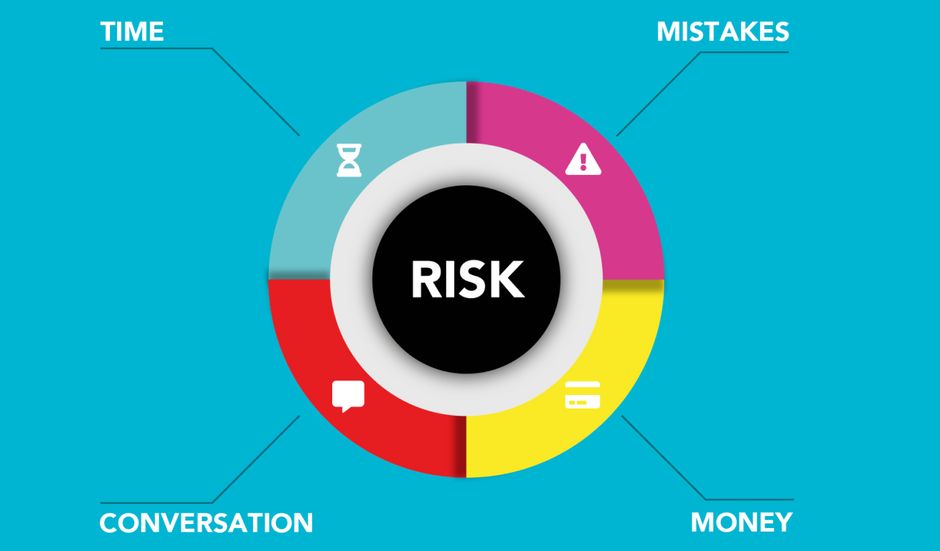
Real estate risk assessment is the systematic evaluation of potential challenges and uncertainties in property investments. It involves identifying financial, legal, market, and physical risks before purchase to protect investments and inform better decision-making. A structured approach helps buyers and investors avoid costly surprises and build long-term wealth confidently. (Related: 2026 Housing Market Predictions: What Real Estate Investors Should Know – Calculator Tools for Scenario Planning) (Related: Property Tax Calculator: Estimate Your Annual Tax Bill Fast) (Related: Understanding the Rate Mortgage Today: A Complete 2026 Guide to Current Rates, Costs, and Savings) (Related: How Rising Mortgage Rates Affect Home Affordability: Calculator Guide for Buyers) (Related: The Complete Guide to Home Buying Costs: What to Budget and How to Calculate Them) (Related: Closing Costs Calculator: Your Complete Guide to Understanding Real Estate Settlement Fees)
What is Real Estate Risk Assessment?
Real estate risk assessment is a structured process that examines every dimension of a property investment before capital is committed. Unlike casual market research, a true assessment quantifies exposure across multiple risk categories — financial, physical, legal, and macroeconomic — and weighs each against expected returns.
According to the U.S. Department of Housing and Urban Development (HUD), informed housing decisions depend on understanding not just price, but the full spectrum of costs and obligations attached to a property. That principle applies equally to first-time buyers and seasoned investors.
A complete risk assessment typically answers three questions: What could go wrong? How likely is it? And what would it cost? Working through those questions systematically is the foundation of sound real estate due diligence.
What are the main types of risks in real estate investing?
Property investment risks fall into four broad categories:
- Market risk: Changes in local or national economic conditions that affect property values and rental demand.
- Property-specific risk: Physical condition issues, deferred maintenance, or environmental hazards tied to the asset itself.
- Financial risk: Interest rate exposure, leverage levels, negative cash flow, and refinancing uncertainty.
- Legal and regulatory risk: Zoning restrictions, title defects, landlord-tenant law changes, and code compliance requirements.
Each category demands a different evaluation method, which is why a checklist-based approach to real estate due diligence is more reliable than gut instinct alone.
Key Risks in Real Estate Investment
Market and Economic Risk Factors
Market risk is the hardest to control because it originates outside the property itself. Interest rate movements directly affect both borrowing costs and property valuations — when the Federal Reserve tightens monetary policy, cap rates often expand, compressing asset values. Local job market health, population trends, and new housing supply all feed into demand-side risk as well.
Investors should examine at least 10 years of price history for a target market, study current vacancy rates, and review municipal budget health. A city with shrinking tax revenues and population decline carries fundamentally different risk than a high-growth suburb with constrained supply.
Before committing to a purchase, running a forward-looking cash flow projection that stress-tests multiple rate scenarios is essential. Our mortgage payment estimator lets you model different rate environments quickly so you can see how monthly obligations shift under adverse conditions.
Property-Specific Risks to Evaluate
Physical risks are the most visible category and often the most immediately expensive. A professional home inspection is non-negotiable, but savvy buyers go further. Environmental assessments, sewer scope inspections, and roof certifications each address failure points that a standard inspection may not fully capture.
Age of mechanical systems — HVAC, plumbing, electrical panels — matters significantly. A property with a 25-year-old roof, original windows, and aging HVAC represents capital expenditure risk that should be priced into your offer or reflected in your return projections. Deferred maintenance at acquisition almost always costs more than sellers disclose.
Flood zone designation is another frequently overlooked property-specific risk. Properties in FEMA Special Flood Hazard Areas carry mandatory flood insurance requirements that can add thousands of dollars annually to holding costs, materially changing investment returns.
Legal and Regulatory Compliance Risks
Title issues, unpermitted additions, and zoning non-conformities can turn a seemingly sound investment into a legal and financial burden. A title search conducted by a qualified attorney or title company should be standard practice on every transaction. Unpermitted square footage may not be insurable and can create liability exposure if future buyers discover the issue.
Rent control ordinances, short-term rental restrictions, and landlord-tenant regulations vary dramatically by jurisdiction and change frequently. Investors targeting income-producing properties should research local regulatory environments thoroughly before underwriting any deal. What is legal and profitable today may be restricted by next year’s legislative session.
Mitigation Strategies and Best Practices
Mitigating real estate challenges requires layering multiple protective strategies rather than relying on a single safeguard. Here are the seven essential steps that form a reliable risk management framework:
- Commission a full property inspection from a licensed inspector before removing contingencies.
- Order a title search and purchase title insurance to protect against hidden ownership claims or liens.
- Stress-test your financing by modeling payments at rates 150–200 basis points above your locked rate.
- Build adequate cash reserves — most advisors recommend 3–6 months of carrying costs in liquid savings.
- Verify zoning compliance for your intended use before closing, not after.
- Review local market data independently rather than relying solely on listing agent representations.
- Quantify your exit strategy — know your break-even timeline and what conditions would trigger a sale.
Each step addresses a different failure mode. Together, they create overlapping layers of protection that significantly reduce the probability of a catastrophic outcome.
Using Calculators to Assess Real Estate Risk
Numbers turn abstract risk into concrete decisions. The most powerful tool in any investor’s due diligence process is a reliable set of financial models that let you see how a property performs across different scenarios.
Start with your acquisition cost and financing structure. Use our closing cost estimator to capture the full out-of-pocket investment at settlement — not just the down payment. Many buyers underestimate total acquisition costs by 2–4%, which distorts their actual return calculations from day one.
From there, model your ongoing cash flow with realistic vacancy assumptions (typically 5–8% for residential rentals in stable markets), maintenance reserves, and management fees. Properties that look profitable at 100% occupancy often show negative cash flow once realistic operating assumptions are applied. That gap is where risk lives.
According to HUD’s homebuying guidance, understanding the true cost of homeownership is foundational to making sustainable housing decisions — a standard that applies equally to investment properties.
Frequently Asked Questions
How do you identify and mitigate risks in property investment?
Identify risks through professional inspections, title searches, market research, and financial stress-testing. Mitigate them by maintaining cash reserves, purchasing appropriate insurance, verifying legal compliance, and structuring financing conservatively. Layering multiple protections is more reliable than any single safeguard.
What due diligence should I complete before buying an investment property?
At minimum: a licensed property inspection, a title search, a review of local zoning and rental regulations, an independent appraisal or comparative market analysis, and a detailed cash flow projection modeling multiple vacancy and rate scenarios.
How much risk is acceptable in a real estate investment?
Acceptable risk depends on your financial position, investment timeline, and return expectations. A useful benchmark
- Real Estate Investment Analysis Software (BiggerPockets Pro) — Directly supports the systematic evaluation and risk assessment process described in the post by providing tools for financial analysis, market research, and investment property evaluation
- Home Inspection Equipment & Thermal Imaging Camera — Essential for physical risk assessment mentioned in the post, helping investors identify structural issues, insulation problems, and potential property defects before purchase
- Real Estate Due Diligence & Title Search Services (LegalZoom) — Covers legal risk assessment component by providing title searches, document review, and legal compliance verification that protect real estate investments
See also: How to Negotiate Home Price When Buying: 7 Proven Strategies for 2026
See also: How to Use a Real Estate Investment Calculator Effectively in 2026: The Complete Guide
Related: Essential Tenant Screening and Selection Guide: Reduce Risk in 2026
Related: Housing Market Crash Risk Assessment: Using Real Estate Calculators to Evaluate Investment Safety
Related: How to Evaluate Neighborhood Quality for Real Estate Investment in 2026: 7 Essential Metrics