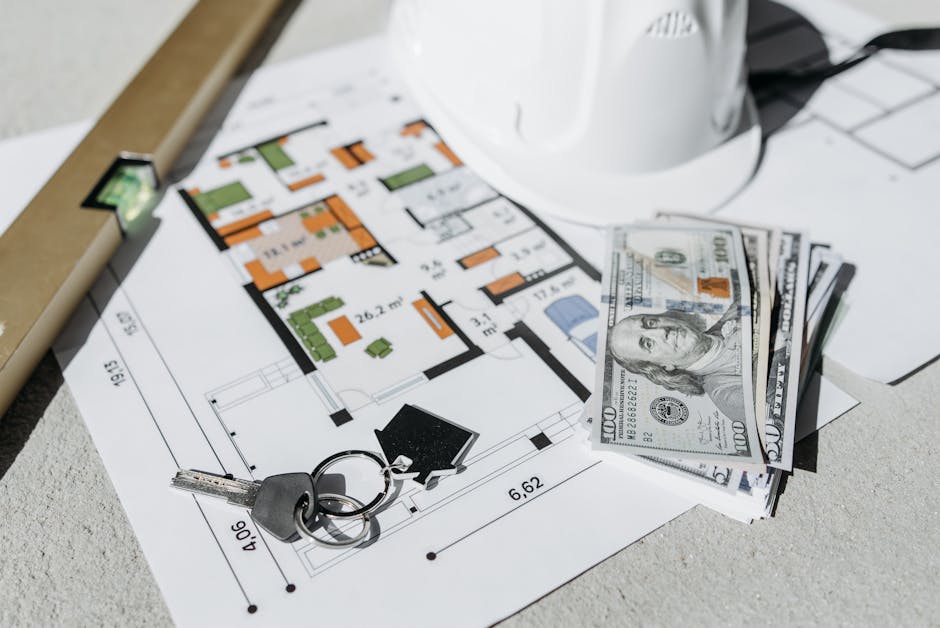
Construction loans finance new home building and are disbursed in stages as work progresses, while traditional mortgages finance existing properties with fixed monthly payments. Construction loans typically have shorter terms and higher rates, converting to regular mortgages upon completion.
What Are Construction Loans?
A construction loan is a short-term financing tool designed specifically to fund the building of a new home. Rather than receiving a lump sum upfront, borrowers access funds incrementally through a process called a “draw schedule.” As your builder completes defined phases — foundation, framing, roofing, and so on — the lender releases funds to cover those costs.
These loans typically run 12 to 18 months, covering only the active construction period. During this time, most borrowers pay interest only on the amount drawn, not the total loan amount. That keeps monthly costs lower during the build, but rates are usually variable and tied to market indexes.
Lenders underwrite construction loans more rigorously than standard mortgages because the collateral — your finished home — doesn’t exist yet. You’ll need detailed builder contracts, architectural plans, project timelines, and cost breakdowns before a lender will approve funding. Down payment requirements also tend to be higher, often 20% or more.
To estimate how much your project might cost on a monthly basis during the build phase, our construction loan payment estimator can help you map out interest-only payments at various draw stages.
What Are Traditional Mortgages?
A traditional mortgage is a long-term loan used to purchase an already-built home. The lender provides the full loan amount at closing, which is used to pay the seller. You then repay the loan — principal plus interest — over a fixed term, typically 15 or 30 years.
Because the home already exists, the lender can appraise it immediately, assess its condition, and verify its market value. This makes underwriting more straightforward compared to a construction loan. Rates on conventional mortgages are generally lower and can be fixed for the life of the loan, providing payment stability.
According to HUD (U.S. Department of Housing and Urban Development), various mortgage programs exist to help buyers qualify, including FHA loans with down payments as low as 3.5%. These options are simply not available in the same form for construction financing.
Key Differences Between Construction Loans and Mortgages
What is the difference between a construction loan and a mortgage?
The core difference between a construction loan vs traditional mortgage comes down to purpose, structure, and risk. Here are five distinctions that matter most in 2026:
- Disbursement method: Construction loans release funds in draws as work is completed. Mortgages disburse the full amount at closing.
- Loan term: Construction loans last 12–18 months. Traditional mortgages run 15–30 years.
- Interest structure: Construction loans charge interest only on drawn amounts during the build. Mortgages charge interest on the full balance from day one.
- Rate type: Construction loans are usually variable. Mortgages can be fixed or adjustable.
- Collateral: Construction loans are secured by land and future value. Mortgages are secured by an existing, appraised property.
Understanding these differences between construction and mortgage loans helps you plan your budget and timeline before committing to either path.
Interest Rates and Costs Comparison
Interest rates on construction loans are typically 0.5% to 1% higher than conventional mortgage rates. That spread exists because lenders take on more risk when financing a home that hasn’t been built yet. If the project stalls or the builder defaults, the lender’s collateral is incomplete.
Beyond interest, construction loans carry additional costs: inspections at each draw stage, origination fees, and sometimes a “construction-to-permanent” conversion fee if you’re rolling the loan into a mortgage at completion. Budget for these add-ons early.
With a traditional mortgage, your primary costs at closing include origination fees, title insurance, appraisal, and prepaid interest. These are well-documented and easier to compare across lenders using standardized Loan Estimate forms, as required by federal lending regulations.
Use our monthly mortgage payment calculator to compare what your payments would look like once your construction loan converts — or if you purchase an existing home instead.
Timeline and Approval Process
Approval timelines differ significantly. A traditional mortgage can close in 30–45 days once you’re under contract. A construction loan approval may take 60–90 days because lenders must review your builder’s credentials, architectural plans, permit status, and project budget in detail.
Once construction begins, lenders typically conduct draw inspections every 30 days or at each project milestone. This ongoing oversight adds time and coordination requirements that buyers financing existing homes never face.
If delays push your construction timeline past the loan’s maturity date, you may need a loan extension — which carries its own fees. Buyers purchasing existing homes don’t face this risk.
Which Option Is Right for You?
Choose a construction loan if you’re building a custom home on land you own or are purchasing, and you need financing to fund the build from the ground up. This path offers full control over design and materials but requires significantly more planning, documentation, and financial cushion.
Choose a traditional mortgage if you’re purchasing an existing home. You’ll benefit from lower rates, simpler underwriting, more program options, and a faster path to ownership. For most buyers, this is the more accessible and predictable route.
A hybrid scenario — where you buy land, build, and convert to a permanent mortgage — requires careful planning from the start. Nail down your total project budget before breaking ground. Our home affordability estimator can help you figure out how much total financing fits your income and debt picture before you commit to either path.
Construction Loan to Mortgage Conversion
Can a construction loan be converted to a traditional mortgage?
Yes — and this is one of the most important decisions in how construction loans work. There are two main structures:
Construction-to-Permanent (C-to-P) Loan: Also called a “one-time close” loan, this product combines the construction phase and permanent mortgage into a single loan with one closing. You lock your permanent rate upfront, avoiding a second round of closing costs. This is generally the more cost-efficient option if rates are favorable at the time of application.
Two-Time Close: Here, you take out a standalone construction loan, complete the build, then apply for and close a separate permanent mortgage. This adds cost and requires a second full underwriting process, but it gives you flexibility to shop for better mortgage terms once the home is complete.
According to HUD’s Title I program guidance, borrowers should carefully review all financing terms before combining construction and permanent lending — the structure you choose affects your long-term cost significantly.
Frequently Asked Questions
Do construction loans require a larger down payment than mortgages?
Yes. Most construction loans require 20% or more down because the collateral — the finished home — doesn’t exist yet. Traditional mortgages backed by FHA can go as low as 3.5% down, and some conventional programs allow 5% down for qualified borrowers.